 Department Homepage
The College of Arts & Sciences
Department Homepage
The College of Arts & Sciences
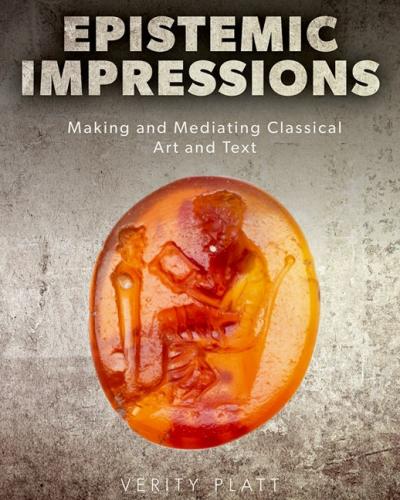
Epistemic Impressions: Making and Mediating Classical Art and Text
This book advances a new history of image-making and art-text relations in antiquity. Moving away from imitation (mimēsis), it looks to the concept of the seal-impression (typos), which played a vital role in ancient philosophies of mind: seals were ‘epistemic objects’ that informed complex thinking about form, matter, and medium. As an indexically produced image, the typos offered a model of perception and knowledge transmission grounded in material processes of engraving and stamping, which were closely related to sculptural moulding and casting (plastikē). These had a profound influence on concepts of truth, representation, and replication, offering a materially embedded ontology of the image that had far-reaching implications for Graeco-Roman aesthetics. Drawing on theories of media, the book explores how impressing (typōsis) was especially significant for literary engagements with artworks, informing Greek models of intermediality from archaic poetry to imperial Greek prose and early Christian exegesis. Advancing an ‘object-oriented’ approach that dislodges the trope of ekphrasis in favour of embodied processes of making, it focuses on Hellenistic epigrams, especially those ascribed to the third-century bce poet Posidippus, who drew on practices of engraving, stamping, and casting in his Lithika and Andriantopoiika. These are set within the longer history of intermedial relations in the Greek Anthology under the Roman Empire and in early Byzantium. As a prehistory of analogue modes of reproduction (and thus the concept of ‘type’), Epistemic Impressions demonstrates how, just as many ancient concerns with the visual may seem surprisingly modern, so many modern preoccupations are more ancient than we might presume.